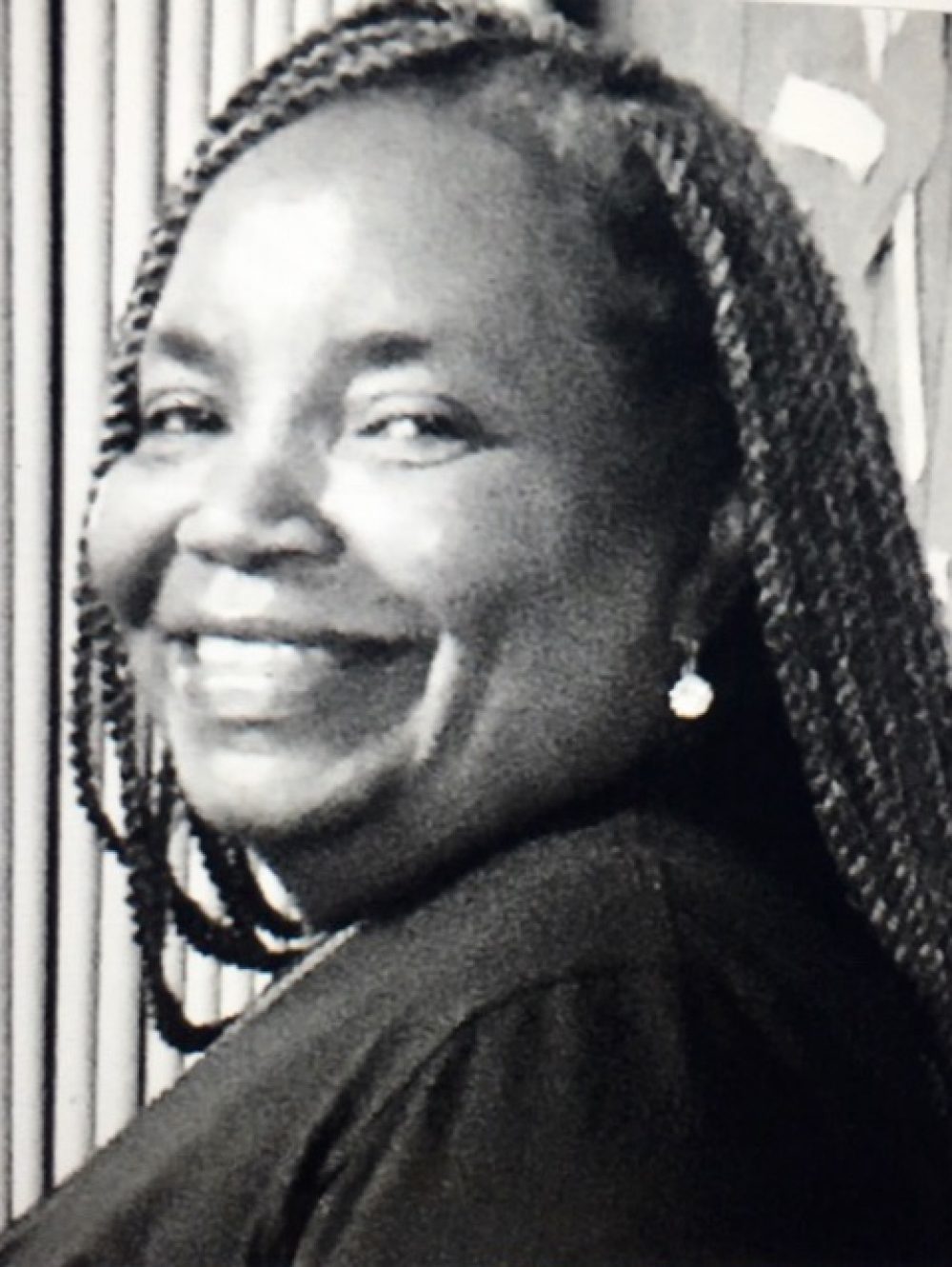
As a divorced pastor, I was not aware of how much of an anomaly I was. The image of the preacher and his wife is still the dominant one (and I use the phrase “his wife” deliberately). Even in the context of the most post-modern and progressive church, the image of the preacher and his/her family still remains strong. The clergy families may consist of two mommies or two daddies or a mommy and a daddy who have thought progressively about marriage. But that structure remains unchanged.
I remember talking to my pastor at the beginning of my first attempt at the ordination process. And he said I was going to struggle as a “single black female with children. ”And beyond the fact that it sounded a little petty to me and judgmental. I did take his words very seriously and tried my best to hide the yearning and thought of preaching from my mind. I was still welcomed to continue as youth director and musician. For me this was a personal issue with no real relevance to my vocational life as being a clergy. So I prayed and waited for the next pastor , the next and the next pastor.
“For some reason, I felt I had to say ‘Yes’ or ‘No’ to the ministry so I could feel free again. My siblings and friends talked almost casually about options and preferences as to careers, but with no evident sense of urgency. Not so with me. I did not then nor do I now know whether the burden of choice was a trait of personality, a kind of super-conscientiousness, whether the calling to ministry itself carried a weight, a burden, peculiar to the task itself. Rightly or wrongly, when I thought of possibly becoming a nurse, that would be a choice, 100 percent mine. When I considered becoming a minister, that was not totally my decision; I was responding to God’s will for me. Of course, I had been told that journalists, lawyers, teachers, merchants, farmers—all could understand their lives as a vocation, a calling, but what I am telling you is that I perceived, I felt, I experienced the idea of being a preacher as different, and that difference was sobering, even burdensome. That’s why advice about not being in a hurry, taking my time, was not helpful even if wise. If it was my decision, why could I not make it now; if it was God’s decision, why did not God tell me, or at least tell my father or my mother? I prayed for the ache to leave me.”
Finally my chance came as an older gentlemen became our Pastor after the appointments was read at the Annual Conference. I am a Methodist . This was a change of the moment the Pastor said, God in my had a sense of humor. After this Pastor was there for a few months and the wheels began to turn for my good. All my patience and waiting on the right time finally came. I was admitted on trail and went through all the connections and finally , I was a licensed Pastor. Hallelujah!
Being single was hard especially with six children. Being single and a pastor was even harder with a job and school. I haven’t preach a sermon on being single myself . I really didn’t think that it was important. I found out that the church can be an isolating place for single people. Despite this, I love my job. I am grateful for the season of life I’m in, but that doesn’t mean I don’t wrestle with the challenges of being a single pastor.
People often ask me a lot of question about don’t I get lonely. This list get longer and longer and if you’ve been in church leadership for a significant amount of time, you will hear some questions people have asked too. For single pastors, though, there are a unique set of situations that have to be navigated with grace and a firm tone. Like the request for a private prayer session, the hug that lingers way too long, or having a man tell you that God told him you were supposed to be his wife—even though God has not communicated that message to you. I learned pretty quickly how important boundaries are and the importance of referring specific cases to a male pastor. I learned quickly what the scripture that warns us to guard our heart.
Another challenging issue for single pastors is work-life balance. In the church, work-life balance is often discussed within the context of marriage and family. I used to think that because I wasn’t married and had kids, work-life balance didn’t apply to me. No one explicitly says you need to have a healthy work-life balance so that you can have healthy friendships. The truth is that work-life balance applies to everyone. Just because I’m single doesn’t mean that I shouldn’t prioritize my friendships and self-care. I had to learn that it was okay to leave work at a normal hour to spend time with my family and friends, work out, or just do something for me.
Being a single pastor also makes have a dating life challenging. Dating within the church can be complicated, and everyone seems to know your business regardless of the size of your church. Even if you’re meeting people online or outside the church, I’ve found that one of the easiest way to shut down a conversation with a potential interest is to tell him what you do for a living. I never had that problem with person knocking down my door to take me out or even visit.
For some reason, church staffs tend to have a very high number of married people. Because of this, even simple staff gatherings and conversations can be a painful reminder of your singleness. It might be an invitation to attend a staff party with your spouse and you’re the only one who shows up alone because there wasn’t an opportunity to bring a date or friend.
Or it might be the constant reminder from coworkers to spend quality time with your family. One year, we were given staff Christmas gifts themed around spending time with your spouse and kids. It was a very thoughtful gift given with good intentions, but it was a painful reminder that I was once again alone for the holidays.
It can often seem as if the church places marriage above all other types of relationships. I believe marriage is a beautiful form of intimate relationship with another person, but to place it above all other relationships is problematic. There is beauty and joy to be found in relationships whether you’re single or married—and we miss out when we primarily focus on the marital relationships.
While there are a lot of challenges, there are also plenty of amazing experiences that come with this role. I am often entrusted with the stories of others who are in the same season of life as me. They’re usually struggling with similar things, wondering how to be content, and wondering if they’ll ever feel complete without a spouse. It’s a joy for me to offer messages of hope and new ways of approaching their singleness.
My hope has been born out of the pain of being single and wanting something different. I have watched friend after friend find “the one.” Each time I wonder if it will ever be my turn, and I question whether I can stay content in a season of life I never expected to last this long.
Through this journey, however, I’ve come to see that marriage isn’t the goal. God values inclusive community for all people—married, single, divorced, or widowed—and that’s what we’re working toward. God created us as relational beings made for this beautiful community.
There was a time when I focused solely on what was missing from my life: a spouse. After a lot of prayer, therapy, and self-reflection, I realized that I was missing out on the beauty of all the different relationships that I already had in my life. I may not be a wife but I am a daughter, sister, aunt, friend, mentor, and pastor. I made a choice to invest deeply in these relationships and create a chosen family, a group of people that are committed to doing life with me for the long haul. Today, I have an amazing community made up of single people, married couples, and parents from different backgrounds, classes, and cultures. I cannot imagine doing life without them. We navigate big decisions together, babysitter for each other’s kids, talked about the challenges of being single and married, vacations together, and cook meals together. They challenge me, support me, care for me, pray with me, and, most importantly, love me unconditionally. They are my family, and if I meet the man of my dreams tomorrow my family will continue to grow.
That is the beauty of the church. We are called to be a loving, supportive community for all people. Within the body of Christ, no one should feel like a second-class citizen because of their marital status. While I still wrestle with my singleness, I am committed to creating space in our community to discuss these issues. I’ve been given the gift of seeing how the church can unintentionally harm people in this season of life and how marriage can be the default perspective for many church leaders. Because God has allowed me to see this, I am able to share my perspective and help others see God and the value of community in new ways. God does not discriminate with his love, and he desires for us all to experience that love to the full, regardless of our marital status.
As single pastors, we get to wrestle with and model this truth. We have an opportunity to ask ourselves: How can we challenge our small-group members, both married and single, to expand their view of community? How are we helping single people invest in building well-rounded community that encourages them to grow and experience the love of God in tangible ways? How are we talking about relationships in holistic ways, rather than just from the perspective of marriage.
We should celebrate our singleness just as married pastors celebrate their marriages. We should tell the real stories of pain, joy, and celebration because, I promise you, there are others in your congregation who need to hear they’re not alone, they belong, and their story matters.
There is beauty in the stories and experiences of single people. We need to elevate those stories to combat the shame often associated with this season of life. The church needs the voices of single people in order to be at its best and experience God more fully. The New Testament is full of single people experiencing radical community, living full lives and changing the world. Why should our churches be any different?
It takes strength, vulnerability, and courage to share this part of our lives because there’s still some shame attached to being single. This is the reason I believe we need more leaders who are willing to show up, embrace their singleness, and share how the love of the Father and transformative community can remind us everyday that we are whole, valuable, and beautiful in the sight of God just as we are. So here I am from the call to the cloth and is striving on to perfection with the power and strength of God with me. I have learned on this journey I am not alone.
I never wanted to be a single mom. I never wanted to raise my five sons and one daughter alone. I didn’t think I could do it, physically, emotionally, or financially. As I reflect back on that time twenty plus years later I am grateful for that darkness for two reasons. Number one is I know now that God never left me, and two It was this visit, this escape from my years of domestic violence trying to be the good submissive wife, perfect mother, and perfect Christian that I realized I was being controlled by my spouse.
How can I be a pastor who is a divorced single mom? I remember my dad telling me something along the lines of “Don’t forget what your identity in Christ is, not your married identity, not your mother identity, who You are in Christ”. And I began to unravel all the trauma of the emotional and spiritual abuse. I was so lost I remember just opening up the Bible and reading whatever it plopped open to (you know you’ve done this before). It plopped open to Joshua… and I read the story of Rahab (Joshua chapter 2). Rahab the harlot who is in the lineage of Jesus. Rahab was used by God for her faithfulness to God’s people. In other words God used a harlot to help Gods people to safety while on their journey to the promised land. Yup. In my dark, possibly my darkest time, The Holy Spirit ( He knows what we need when we need it) led me to read the story of Rahab. It was then that I knew what I was supposed to do. If God used Rahab with her background and Rahab is in the lineage of Jesus. Then there was no doubt that God could use me even with the labels of divorced, single-mother. That brief moment of quiet time sparked hope deep inside my soul, and even though that Christmas I walked away with the most precious gifts that I could receive. My children and safety. We left just with the clothes on our back walking not looking back at the things that was behind us. It wasn’t particularly happy or joyful but I was also gifted with this little spark of hope and knew that somehow my messed up chaotic life would still be used for God’s glory.
I know there are people reading this who are on the verge of relationships falling apart, perhaps divorce, perhaps some sort of scandal, perhaps facing becoming a single parent and that this can feel overwhelming. I know that finding JOY in this season is way too hard. It’s okay to sit with darkness. God never leaves us no matter how dark it gets. I am not saying my thirty minutes of scripture reading about Rahab solved all my problems and all my darkness went away. Divorce, moving back in with my parent, being a single mother and + years of pastoral ministry has had all sorts of dark twisty roads. What I’m trying to say is that light may feel far far away and that’s ok. What I long for you to cling to is that many many years ago God knew all of the heartache and darkness of humanity on earth and sent God’s self to earth in the form of a little baby. To a mother and father whose lives were turned upside down and maybe at one point in time as parents they too had times of darkness. With all of whatever darkness or chaos is going on in your life right now, however far away joy may feel; what I want you to know is that God still wants you. God sees your heart, knows your pain, is there with you in your darkness and loves you, unconditionally. And my prayer is that somehow the Holy Spirit will give you a tiny piece of hope that will rest deep inside your soul. I pray that little piece of hope, whatever it is, will grow and well up inside of you until you’re ready to lean into it and perhaps let it break through a bit of the darkness.
Today. My children are all married and grown with children. I have more than enough and I am enough. Be Blessed!

